
The story
A clinic’s waiting room runs on shouting. Someone calls a name, half the room doesn’t hear it, and the person who stepped outside loses their turn. The cost that never appears in a feature list is the staff time: a receptionist spends the day re-explaining the order to people convinced they were skipped, and every one of those conversations happens while somebody else waits.
The software that fixes this is built for hospitals — a server, a network, a per-seat licence, an IT contact. A three-doctor clinic has one PC at reception and a television on the wall.
The clinic never asked for software. It asked for the waiting room to stop being an argument.
The product
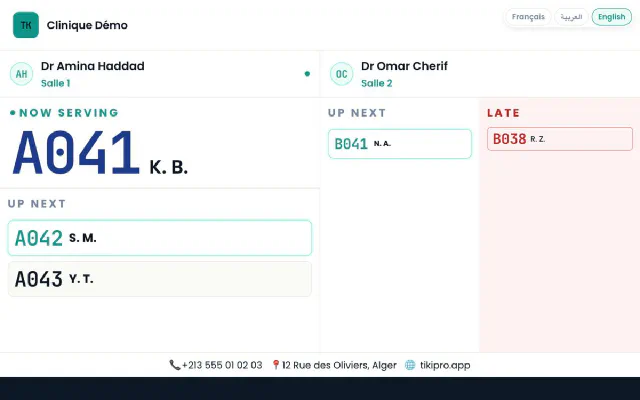
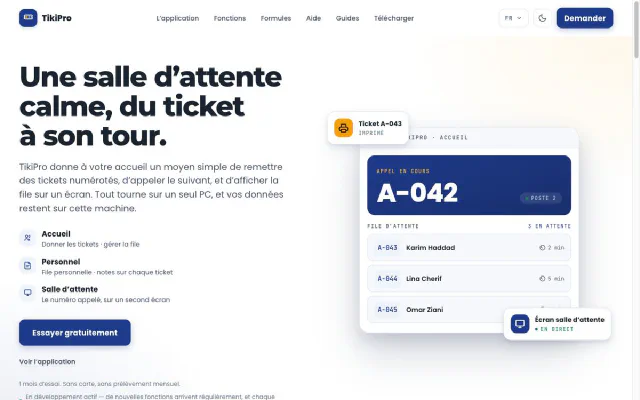
Reception, the waiting-room board and each doctor’s queue are three views of one application running on that single machine. The board is just a browser page on the second screen, so there is no second machine and no second licence, and patients can scan a QR code to watch the same live list on their phone.
Around it sits everything needed for a stranger to buy and run it alone: offline-verified licence keys, an auto-update feed, an admin portal, and an audit log on every operation that touches patient data. Nothing phones home, because a clinic with a dead connection still has to open the door in the morning.